Tuesday, August 2, 2016

July Breakfast


Sunday morning, July 10, the day was bright and warm, perfect for serving a hot meal. It had been over a month since I’d been to the encampment we’ve been serving breakfast for eight months. Father’s Day I was overseas. However, I saw the lovely photos and heard about the Moroccan chicken and stewed potatoes, along with the beef links, banana bread and red beans and rice, oh and the boiled eggs and coffee. Jovelyn wasn’t with us this morning, with a surprising dish, but Delene was back and she and I joined the crew which included her husband, Kwalin, along with Tabaji and Wanda R.

We pulled up about 8 a.m. and before we could set up, the word was getting around that we’d arrived and had breakfast and coffee and water. People woke up. Wives got breakfast for husbands and husbands got breakfast for wives. For those who couldn’t walk, we took breakfast to them.

After the plates were packaged. Delene, Kwalin and I walked the neighborhood giving meals to those people in tents nearby or just in the vicinity. One man woke his sister. The neighbors were sleeping really soundly and at 8 a.m. a few people passed on the meal for more sleep. For those who woke up, they ate breakfast in bed and then returned to sleep on a full warm stomach.

I felt the peace and content solitude when I returned to the first encampment to pick up my car about 10:30 a.m.  It was quiet and people were sleeping again.

There had been more dumping of debris—corners filled with trash and distasteful piles of junk, a eyesore no one wanted to look at each day.  The city needs to pick up the trash and garbage dumped in public spaces. The people living here had cleaned the area.  We didn’t have garbage bags or pinesol this time, but folks had been doing what they could to make their space hospitable and welcoming.

Delene and I kept walking and ended up on Wood Street where we shared breakfast with a few people stirring at 9:30-10 a.m. There was a roped off area where people once had tents which was the site for sewage work. The 72 hour notice, posted June 14, was still on the fence.

Obviously, the words “vacate,” meant just that.

Everyone at the first site met us on Wood Street where we roused those who were away and stirring. Delene and I had run out of food and coffee, so our reinforcements were able to fill more plates and cups with coffee. I was disappointed Darlene wasn’t up that morning. She loves black coffee with her cigarette and I wanted to save her the walk up the block.

We piled into our cars and drove further up the block to another section of Wood Street where people were in cars, campers, trucks and other semi-permanent housing—It looked really good.  Sheila, who calls herself the spokesperson for the group helped us serve the meals. Everyone was happy to get breakfast. Many served were clearly hungry, really hungry.  Wanda and Tabaji fixed plates with beans and rice, and it was welcomed. We served more than 50 people, probably more like 60-70 that morning.

We had coffee left over, and I took it to Lakehurst hotel in Oakland whose residents do not have meals on the weekend.  Lisa and I took lunch by a couple of weeks ago. The residents are mentally ill or have cognitive challenges.

The Auset Movement chose this weekend to serve the residents, because we’d been told the people would be getting a 72 hour NOTICE TO VACATE Wednesday, July 13, 8:30 a.m. We wanted to give them a heads up and tell them not to worry or panic.

Monday, August 1, 2016

A Public Conversation on Homelessness: Monday August 1st at 5:30 PM

Location: Oakland Metro Opera House, 522 2nd Street, Jack London, Oakland

Invited Panelists:

Elaine de Coligny
, Executive Director, EveryOne Home
Andy Standfield, Resident at local encampment
Peter Radu, Department of Homelessness and Supportive Housing, San Francisco and Co-Author, A Place To Be, Report with UC Berkeley Goldman School of Public Policy
Lynette McElhanney, District 3 Council President, City of Oakland

There is increasing momentum from public and private sector to find compassionate, sustainable solutions for our homeless crisis. Join the conversation to learn about current initiatives and changes. RSVP to info@jacklondonoakland.org.

Thank you to Oakland Metro Operahouse and our intern Adrian Napolitano of UC Berkeley Department of City and Regional Planning for making this event possible.

See you there!

-Savlan Hauser, Executive Director
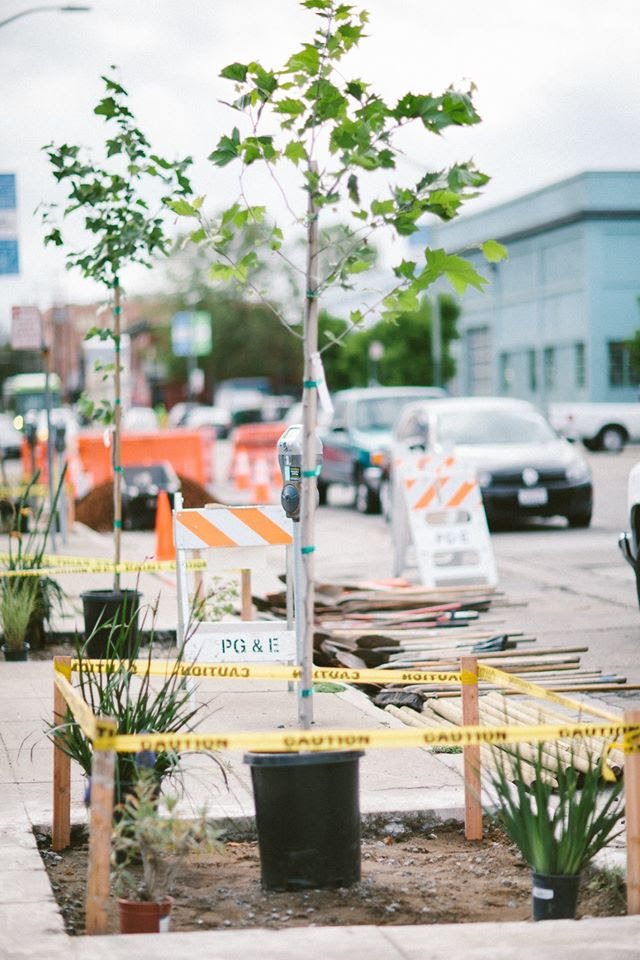
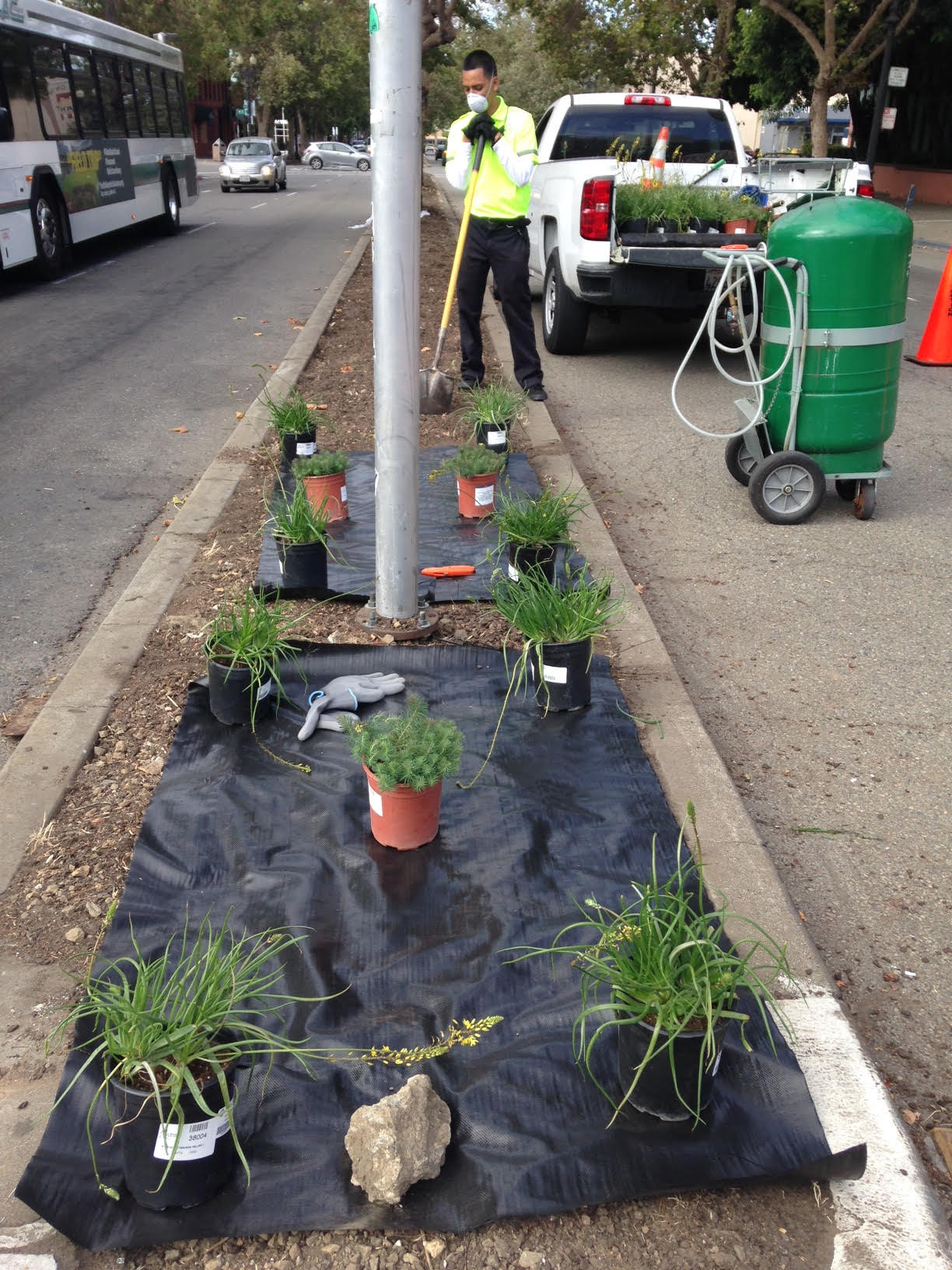
 Utility Box by Linnea HollandUrban Releaf and Teecom Median Planting Jack London

Ambassador Operation Schedule
Monday-Thursday 8:00 AM to 9:00 PM
Friday-Saturday 9:00 AM to 11:00 PM
Sunday 8:30 AM to 4:30 PM
(510) 363-0989

Monday, July 11, 2016

First person: Kheven LaGrone

Oakland Attacks the Poor on Behalf of the Affluent
By Kheven LaGrone

In January 2016, the Oakland City Council declared a shelter crisis. They acknowledged that a significant number of Oakland citizens had no ability to obtain housing in the city. The City Council then gave the City Administrator 15 days to open up the Lake Merritt Garden Center or some other facility as a temporary shelter.

Then in April 2016, the City Council voted to adopt “Love Life” as the city’s motto. It was another way of saying “love thy neighbor.” The council hoped this new motto would help spread brotherly-sisterly love throughout the city. This would help reduce violence by humanizing the “new” Oakland.
How would these two council actions impact Tim Banks, a homeless man whom the City had removed from the encampment at Lake Merritt that neighbored a luxury high-rise apartment building?

Because Banks was homeless and lived in the encampment at the foot of Lakeshore Avenue, people walking around the lake, as well as some people living in the nearby luxury high-rise, openly dehumanized him to his face. They let him know that he was disdained and unloved. This hurt him.
“They think we’re trash, filthy and unsanitary,” he told me. “They told me that I made the area look bad because of my circumstance. They said, ‘You shouldn’t be here.’ They asked me, ‘Isn’t there somewhere else where you could set up camp?’”

Banks was especially humiliated when the City chased him and others out of the encampment, as if they were intruders or vermin. City officials came out and gave them 24 hours to leave. It was winter. Even though the Oakland City Council was discussing the declaration of a shelter crisis, the City didn’t offer him or the other homeless people anywhere else to go.

City officials just told them to leave, and then came back with the police to remove those who wouldn’t leave. The police intimidated homeless people. Homeless people didn’t want trouble. They didn’t want to go to jail. The homeless citizens didn’t know where to go, but they moved without protest.

At the time, Tim Banks had a tent at the Lake Merritt encampment. He asked the City for a one-day extension because he had to go to work. When he returned from work the next day, the City had taken his tent. He was told that he could retrieve it, but he didn’t know exactly where it was being stored and he couldn’t take the time off from work.

The City told Banks that he was being displaced because of complaints coming from some people living in the nearby luxury high-rise apartments. I spoke to people at the City about shutting down the Lake Merritt encampment. They sympathized with the people in the encampment, but they had to respond to the complaints from people living in the high-rise and people walking around the lake.
Many complained in the social media. They posted pictures of the encampment with dehumanizing, vilifying comments. Because homeless people had no access to social media, they could not defend themselves. In effect, they were voiceless.

Banks moved to another encampment in San Francisco, until San Francisco shut it down too. My contacts in the City of Oakland explained the problems that result from clearing encampments without giving the people somewhere else to go. They move to other encampments, and this may heighten tension and anxiety.

Established encampments offer the people some security because they know each other and have social bonds. By closing the encampments, the City sends the people to other encampments where they are strangers. This causes disruption and fear. (Note: The people I spoke to at the City of Oakland supported my writing this essay. They felt it was important to humanize the people living in the Lake Merritt encampment.)

Those complaints about the homeless encampments placed Oakland officials in a quandary. Should the City enforce the bullying of its most powerless and vulnerable communities? Or should the City promote a culture of human kindness and brotherly/sisterly love as a part of curbing violence citywide? Does Oakland value the few people who can afford to pay rents of up to $5300 per month more than their neighbors living nearby in the Lake Merritt encampment? If so, what other groups are devalued in the “new” Oakland? Does the “new” Oakland value newcomers more than long-time residents?

With nowhere else to go, some homeless people returned to live in the Lake Merritt encampment. Some new homeless people moved in as well. People walking around the lake, as well as some people living in the high-rise apartments, complained to the city again.

Thursday, April 14, 2016

A Black God Reclaims His Throne By Wanda Sabir

On Harrison Street, a mural with Malcolm X wrapped in dragon imagery bears witness to one of many forgotten geographic legacies – Oakland’s Chinatown was once home to a thriving black community

Etched in survival spaces with prism colors, Black men hover between worlds
They sit between sky and earth signing their names with chromosome markers – XY

There is nowhere where black means safety, especially for those who have taken off from here and live in regions beyond imagination. Hidden in historic patterns fractals reveal, more stable than limbo, one such man wore his robes proudly as he sat on a shopping cart on a busy Oakland street

I wanted to ask him: What happened, but didn’t feel I had the right to request a song, ask him to tell his story—certainly not require him to self-publish.   With civility creating a thin layer between us, did I disrupt this superficial veneer with chatter? Was the space between us big enough to hold funeral rites if he disappeared into previous occupations?

I decided to not disturb the peace and remained silent as:

Ancestors walked between us while Angels flew around us sprinkling libations and anointing what was sacred. As people walked by him and then walked by us, I wondered why this elder sat naked on a shopping cart at 2 p.m. between a Good Friday and a scheduled Resurrection

Had Jesus returned?

I was stunned. I walk away and call a friend to ask what should I do, who could I call – he suggests I go to the Salvation Army store and buy the black god shoes and clothes—

Cloth for the shrine, a bowl for the altar . . . a salute to his Black wonder, I go into the store and make my purchase. It takes longer than I anticipate and I hope he hasn’t left the spot he claimed.
Perhaps this gesture will provide an opening, a way to articulate or put words to my awkwardness – a Black bewilderment which occupies my soul as I gaze at a black god without robes.

The wandering dervish has limited freedom given the descriptive prison black bodies’ represent here in a landscape of whiteness where blackness is criminalized

Why is this man naked?  Why did I see him while others walk by as if he does not exist? Has his value decreased since 1865?  Why did I have to buy clothes for him when the clothes I purchased were a gift? What is a salvation army? How does one enlist?

Later, I see another black man scurrying long as if his carriage is about to turn into a spaghetti squash, the coachmen police or prison guards, a Grimm tale, we all know—day laborers, cinder mattresses . . . levees breached . . . floating bodies

The emperor’s feet are black, his sole callous, hardened . . . yet he whispers “thank you ma’am”

He asks for nothing
Sits on his red shopping cart
Treasures hidden within
Smoking a cigar
With shaven head, this blackened Buddha or enlightened one, sits boldly in Black beingness – his is a silent, yet eloquent expressive blackness,  a black fractal billions of lightyears old; he marks a global landscape, a system of racism (or white supremacy) which wishes us gone . . . back to Africa, out of America, off the planet

Blackness is all things to all things . . . it is where life began.

Displaced in a transatlantic journey still making us sick, we pitch vomit into bags thrown overboard . . . then without thinking drink the water.

The Maafa is real, yet we are here despite the plot to discontinue our genetic line . . . if only we knew who we are, then we would be free—

Hidden from view
Boldly occupying or disrupting viewpoints which would erase him
The emperor sits naked upon a throne at Eighth and Webster Streets in Oakland’s Chinatown
Papa Legba, smokes his pipe undisturbed
Oblivious to all, who do not recognize his greatness – distracting forces disappear while his presence becomes more tangible

I hurried because I thought he would leave if I didn’t return soon. But there he was as when I left him, seated on his throne, invisible servants with plumes fanning their king—the circulating air keeping away the heat and other potential disturbances.

The creator gave Papa Legba the Ashay or life force – Esu/Legba alone awakens the potential lying dormant in all beings; therefore:

I am because he is
We are, because I am
He will, because we do

Ashay!
Ashay!
Ashayo!

Monday, March 14, 2016

The Auset Movement during Women's History Month


Daylight Savings 2016
By Wanda Sabir

RJ and Lisa
Auset Movement members had spoken about Christmas in March,[1] but I didn’t realize that Sunday three of us would actually spend the entire day in the rain helping a homeless woman organize her belongings so she could move into a tent.  Besides the time change, a few of us like Wanda R. and Tabaji ran into snags that morning. When the beans and rice finished, the couple discovered a flooded basement, so it took a minute for them to get their truck out.  They did not cancel. Later on, at 10:30 when we were out of food, they had to dash home to take care of the water.

It was daylight savings and a few of us overslept.  Lisa called me and I called RJ.  Our San Francisco and Hayward crew were on time and at the regular meet-up site at 7:30 a.m.  We normally meet for check-in and prayer, but it was storming, so that would not have worked. I’d meant to call or text them, but forgot.  Dr. Delene had been up all night with preemie babies, yet looked refreshed when I caught up with everyone at the first encampment. Kwalin had on a really cool sweatshirt with triple African continents. It was black on black, the continent designs a raised appliqued on what looked like leather. (No, I didn’t take photos this time).

We met at 9 a.m. and our menu consisted of Chef Lisa’s roasted potatoes, Wanda and Tabaji’s rice and beans, Delene and Kwalin’s hot coffee, apple juice, boiled eggs and my regular contribution of pastries and sausage.  We also always have bottled water. I brought salt and pepper for the eggs and extra raw sugar for the coffee.  In just an hour, we only had two plates left which we packed to take to the next stop – just as we were taking off two men rushed up to see if we had any more food.  

RJ and Wanda
I ran to Delene and Kwalin’s car. They had two plates left on their backseat which we gave to the men along with cups of coffee.  I’d gotten some women’s clothing, shoes and toiletry donations from work, which went quickly. I also brought tarps and a few dozen packages of warm socks. One man asked how often we did this. He told me the night before he’d gotten soaking wet, but was dry now. I gave him some socks for another rainy day and a tarp. Wished I’d had some rain gear.  Another man had on flip flops—his feet were wet.  Lots of black men came by this morning, quite a few whom I didn’t know. Delores said they’d put up signage asking people to not dump trash and so far so good. The folks at this encampment hang rugs to dry on the sunny days off the fences nearby.

Lisa and RJ found a man sleeping on the concrete not far away, and took a breakfast and toiletry items to him with water. Robert told us about another few people whom we had met in a smaller encampment not too far away. He didn’t understand why they chose to be in the rain.  We will probably walk over there next month. The man I’d met earlier this month, sleeping on palettes under a plastic tarp, had relocated with a tent there.

Between the two visits we probably need to look for rain gear, complete suits, to drop off so people can stay dry. I also need to start carrying with the sleeping bag and blanket a two person tent (in my trunk for emergencies). If anyone has any tents, blankets, pillows with cases, he or she can donate, let us know. I am so tired still I have not taken the supplies out of my car yet (smile).

In response to a request for religious services at the encampment, Wanda R. asked the pastor near her home for a reference and he volunteered himself. I introduced Robert to Wanda and she told him what her friend said. There might be a service at the encampment as early as Easter. If so, I will try to attend. My friend, Hassaun, said he could come to perform a service at our next breakfast in April.

Unlike last month, we didn’t have any food for the second encampment, but we went there anyway with hot coffee. Lisa ordered pizza. She said she felt bad when eyes lit up when we arrived, despite our having nothing left.  When we went to pick up the pizza, I saw a young woman I’d met at the encampment we’d just left.  I remembered that she was shivering that morning– soaking wet from her waist into her boots. We offered her and her friend, pizza. She remembered me too. I was glad to see she was dry Sunday morning at the shopping mall. She looked a lot older though. Living on the streets ages a person. 

The hot cheese pizza was welcomed back at the encampment. I saw a woman whose battery I'd given a jump start last month huddled in her car with plastic on her window. I could imagine the cold she was probably experiencing and was happy we could offer her something hot to warm her inside. As we drove slowly by the tents and other makeshift housing, the torrential rain which had been pouring steadily all morning had subsided into a drizzle. I got out Lisa’s car after handing a few people pizza on napkins, and ran up to my parked car where I got bottled water for folks to drink with the snack. I also had toilet tissue for those who needed it.

Lisa drove along slowly serving pizza, we were making our way back to Miss Darlene’s shanty. The structure, if you can call it that, was made from heavy plastic tied to a fence facing a field where freight and passenger trains sped by more than a few times that day.  I saw a wild dog running in the field. I wondered if he was lost or trapped and how he got in there.

Just an hour earlier we’d awakened the older woman who was tucked beneath covers – Delene and Kwalin had purchased an African American illustrated bible for her birthday. Miss Darlene made 51 a week before and had asked if RJ and I could bring her a copy of a bible written in American English. She said it was hard to follow the “thees and thous.” She also stated that no matter how bad it was for her at times, she knew God had not forsaken her or forgotten her.

Completed Tent with Tarp Doorway into Ms. Darlene's Living-room
When we looked inside the open structure, two sets of pretty eyes peaked back at us. The girls were under a blanket with heavy plastic overhead. There was nothing behind them but fencing. We couldn’t tell how old they were, they just looked young, really young. They must really love their Auntie Darlene to hang out in a homeless encampment in wet weather for the weekend. I’d met one of the teens a couple of months earlier, on Martin King Day to be exact; when I reminded her of this, she looked surprised that I would remember her name.

How many mothers name their daughters after my favorite author?  I told her that her Aunt Darlene shared with me news of her Black History Month award winning essay and how proud she was of her. The teen kind of smiled.

After the pizza, which the two girls seemed to enjoy, we saw them pull on boots and coats and walk up the road, presumably home. Their aunt had gone salvaging. Lisa and I saw her with empty plastic containers in her arms headed back to the encampment as we left her to find planks or buy plywood to support a tent.

Those recyclable items at the site were a safety deposit box Miss Darlene could cash in as needed. These Certificates of Deposit (CDs) equaled ready cash when she needed it. She told us stories of being cheated at the scale. She knew the value of the items, but unable to see the scale, she and others had to settle for a fraction of their hauls’ worth.  Her story reminded me of the days when the cash crop differed, but not the methods: cans were cotton.

Her comment was in response to my suggestion that she recycle everything and save the money. RJ and I were going to hire a truck to help her get her items to a recycling place. Given this history, and self-disclosure that she once worked as a modern sharecropper at the scales and knew what a bushel was worth, she declined.

Just as slavery ended when the north and south united, the economies are also taking sides and capitalism is winning. The West Oakland recycling plant is shutting its doors soon to make way for condos. Where will discarded people with discards, toting a devalued cash crop cash in then? With nowhere to go many internally displaced persons carry emaciated spirits.

Seeing children sleeping outdoors, of course, stunned all of us. Miss Darlene’s neighbor confirmed that the teenagers were there only on weekends.  Granted, Miss Darlene talked to herself and seemed to wander off both literally and figuratively, yet we felt a strength and even a stubborn determination.  She just needed a little help. When RJ returned from the hotel, he told Miss Darlene she could stay there, but she needed ID. The woman had none, so. . . . 

With the hotel off the checklist, RJ went shopping and came back with a hundred dollar tent. It was too large for the space and too expensive, so Lisa and I returned it and bought a smaller one for a third of the price (at another store).  While Lisa and I went on our exposition buying the tent and then working on something to put it on: plywood or insulation . . . . RJ and Miss Darlene had started organizing her things. They removed recyclable items and trash to make space.  We thought about setting up the tent under the tarp; however, she had a lot under her awning, years of possessions she couldn’t let go of.  I understood. These items were all that were left of a life she lived in her memories, a time when there was shelter, privacy and perhaps safety.  Before we could set about assembling the tent, we had to level the ground. RJ dug up the dirt, then he and Lisa moved the palettes in the pouring rain.  It was like a jigsaw puzzle. We then put down tarps which blew away as we wrestled with the poles. The tent filled with water, which we later poured out we couldn’t figure out how to hook on the rain fly.  The box said we could assemble this tent in ten minutes. It took us about an hour.  After we erected the tent in one spot, we decided to move it closer to where Miss Darlene was already to make it easier for her to move between to two spaces.

A crowded tour bus drove by while we were out there. It stopped so tourists could take photos. They didn’t get off the bus or ask permission to take the photos.  They left waves and smiles in their wake.  Miss Darlene was really disgusted. She said she didn’t want her family to know she was out there. Shortly after this, a van drove by with a late meal for the occupants of this desolate strip of highway. All day, we’d been splashed by speeding cars and nearly run off the road by others who saw us working, yet disregarded our lives and the lives of others. Just across from us, a few neighbors sat in their tent talking.  A man whose tent was up the road helped RJ move the four wooden pallets ($3 each) which would form a foundation, nearer to Miss Darlene’s place. RJ has a bad back and we didn’t want him to injure himself.  Lisa gave one of the women we’d met over the past few months cereal she had. When she asked her if she wanted the carrots—the woman smiled and said she didn’t have enough teeth to chew carrots.

Tempers were short, well mine was (smile). I felt impatient. I had not planned to spend my whole day at an encampment. I hadn’t eaten since the day before and I was sleep deprived. I was also going to be late for a dinner date if the day continued to move so slowly, yet as the morning and afternoon shifted into evening and I tried to get used to being wet and cold and dirty, I had to keep reminding myself that these belongings represented a woman’s life and as such she was in charge of what she wanted to happen to them, not me.

So I chilled out literally.  I don’t know how all the water ended up inside my coat. Perhaps the water off my umbrella rolled down my back or my running back forth earlier at the first encampment for items when it was storming. I don’t know, but next time, I am going to wear a raincoat myself.

I admired Lisa and RJ’s patience and decided to let their example rub off on me (smile). No one had me hogtied to the road, yet I couldn’t leave, these were my friends and we were all committed to the temporary project: "Miss Darlene's House" (smile). I’d been trying without luck to get some of the service providers (people with City of Oakland money) to meet us at one of our breakfasts to talk to Ms. Darlene or Robert at the other encampment, but they never show up. Kheven typed up a list of emergency shelter addresses with phone numbers, but both of us could see the way people looked at it that they were not going to leave permanent, yet transitory shelter for temporary emergency shelter. At least Miss Darlene had control over her life where she sat, even if it was what one might call squalid and undesirable.  At least in a tent, people had a little more autonomy and security.

We still need to look at permanent housing for all the people who want it, preferably in such a way that the community maintains its integrity. I don’t know what happened to the City of Oakland’s recommendation that there be land set aside for a legal encampment. Delores told me that she’d lost the earrings I’d gotten her when Waste Management (WM) had the folks more all of their tents from one side of the street to another so WM could clean it up. The first encampment and the second looked good. The illegal dumping had ceased. The only problem Robert reported was WM taking their dumpsters whenever they came by, which meant the encampment had nowhere to put the debris. Robert said he would talk to WM, and ask if they had their own garbage bins, would WM dump them and leave the containers.

As we drove off to waves goodbye headed to the next stop, I thought about how blessed we were to have warm homes and other amenities. It was the perfect day to show up too. It is easier to help when the sun is shining, but to show up when the weather is stormy made me feel like we were worthy of the title The Auset Movement: Loving Humanity into Wholeness.

I am also really happy that for some reason, we caught Miss Darlene on a day when her situation allowed us to gift her a tent. She told me just a week earlier that in two years she’d not wanted a tent, because a tent represented a permanence she was resisting. Maybe it was the tears she saw in Lisa’s eyes, the compassion in RJ’s heart or what we saw when we looked into the shelter she’d erected: an older woman and two black girls exposed. It didn’t matter that she had a dog and a cat, this female headed family was open to the elements both natural and unnatural.

It was not safe.  Anyone could walk up on them. She’d fortified the perimeter with shopping carts and bags full of trash, but these were easily removed.

When we left several hours later, RJ and Lisa (mainly) had put wooden platforms where the water was worse: at her front and rear entrances. No longer would she have to wade in water to get in and out of her dwelling. We’d lifted the black heavy plastic and allowed the settled rainwater to run off. RJ cut the excess plastic off and put another piece of plastic in the front of the shelter.

Surrounded by debris so long, just the idea of order probably overwhelmed her, but RJ went inside the tarped enclosure with Miss Darlene and helped her shift through for what was precious and what was trash. There were bugs and vermin in there, RJ said as he worked without gloves (not something I recommend).

Just last week, the older woman told me she was on medication, which affected her memory and thinking. Another relative of hers, a cousin was so happy to see that she had a tent. He didn’t recognize the spot.  He thought someone had taken his cousin’s space and she’d moved away.  Homeless too, he went and got a blanket from a storage bin to put inside their new home. The tent sleeps four adults, so he and Miss Darlene and the girls on the weekend, can easily sleep there. We made sure the both knew where the tent door was and how to get in and out. I told them about the windows they could unzip inside. I think they are going to have fun.

When we finished our work we were all pretty dirty, wet and hungry. It had been a long day—7:30 a.m. to 5 p.m.  I just stepped out of my clothes at the door when I got home, the pile where I left it the following morning when I work up.


[1] Christmas in April is a program that repairs houses for elderly residents. We are going to build houses. The volunteers complete the work in one day.